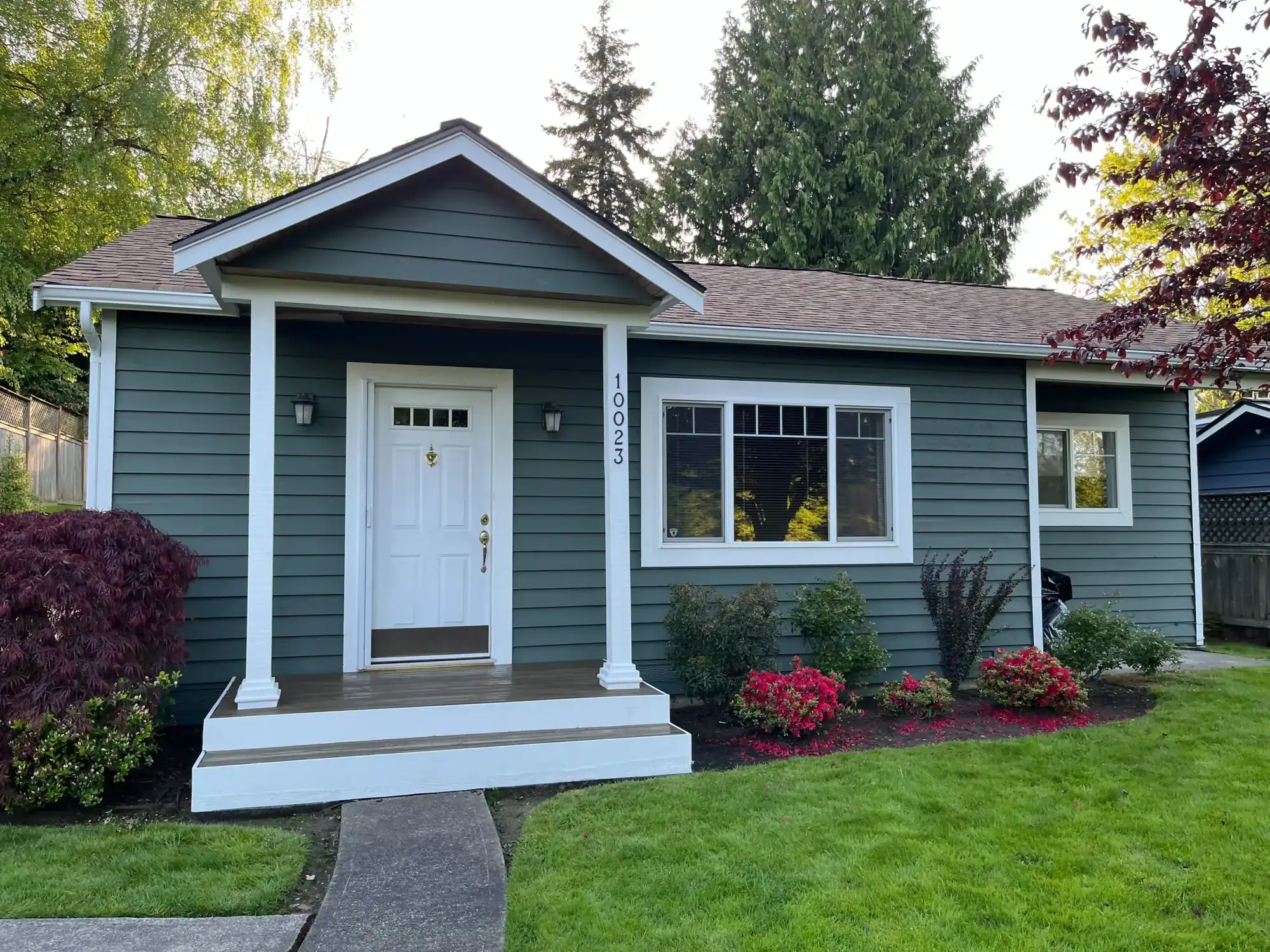
You stand on your Woodinville driveway in late spring and you can see it on the south-facing window casings. Trim paint that looked sharp 18 months ago is starting to crack along the edges. The bottom of the fascia is showing dark streaks that wash off only partially. Pacific Northwest weather on exterior trim is a particular kind of brutal that homeowners in drier markets do not understand.
Most exterior trim paint failures here do not happen randomly. They follow a predictable cycle tied to how persistent humidity, freeze-thaw cycling, and dry summer UV interact with the wood substrate. Catch the early signs and a touch-up holds the line; ignore them and you are looking at wood rot and full-section repaints within a season.
This guide breaks down why exterior trim paint fails in Woodinville, how Seattle-metro climate accelerates each failure mode, what to look for and what to avoid, and how to make the next paint job actually last.
Key Takeaways
- Pacific Northwest’s combination of persistent humidity, roughly 38 inches of annual rainfall, and freeze-thaw cycling creates one of the toughest exterior trim environments in the country.
- Most trim paint failures trace to one of four mistakes: skipped caulk, the wrong product, painting in bad weather, or rushed prep.
- 100% acrylic latex paint is the right product category for Woodinville trim, applied during the right season.
- Early failures show as hairline cracks; ignored, they become full peeling and wood damage within a year.
- Wood trim expands, contracts, and retains moisture once the paint film breaks, which accelerates everything.
Why Exterior Trim Paint Fails in the Pacific Northwest
The Pacific Northwest presents one of the toughest environments for exterior trim paint in the country. Three climate factors compound to shorten trim paint lifecycles compared to drier regions.
The Climate Profile
According to NOAA Seattle climate data, the Seattle metro receives roughly 38 inches of annual rainfall, with persistent humidity from October through May. The wet-cold winter combined with dry-warm summers creates expansion and contraction cycles that stress paint films year-round.
Constant moisture seeps into any unsealed joint, while dry summer UV breaks down the resin binders that hold the paint film together.
How Wood Trim Fails Specifically
Wood trim expands and contracts with temperature swings, then retains moisture once the paint film is broken. That moisture cycling is the dominant failure mechanism on Woodinville trim.
Cedar and other softwoods common on Seattle-area homes amplify the cycling because they absorb water faster than denser hardwoods. The combination of humidity exposure plus rigid paint films is what creates the cracking and peeling pattern most homeowners see.
The Most Common Trim Paint Problems You Will See
Four specific failure modes account for most Woodinville trim paint problems. Each one has its own cause and its own warning signs.
Cracking and Alligatoring
Early failure shows as hairline cracks along grain lines and joint edges. Advanced failure looks like alligator skin: large interconnected cracks across the paint surface in a scaly pattern.
Lower-quality paint applied too thin is the usual cause. The paint film loses elasticity and cannot follow the wood’s natural movement through Woodinville’s wet-dry cycles.
Peeling From Moisture
Peeling almost always traces back to moisture trapped behind the paint film. If caulk has failed at trim joints or if the wood was painted while damp, water finds a path underneath the topcoat.
Once water is behind the paint, the film loses adhesion and lifts off in sheets. The visible peeling is usually just the tip of a larger moisture path you cannot see.
Mildew and Biological Growth
Western Washington homes develop biological growth on exterior surfaces faster than homes in drier climates. Any organic material left on the surface before painting creates a barrier between the substrate and the primer.
That barrier prevents proper adhesion and accelerates failure regardless of how good the topcoat product was.
Poor Adhesion
Low-quality paint with weak adhesion and flexibility, or paint applied to bare wood without primer, causes adhesion problems that show up within months. This is the most preventable failure mode of the four.
What Makes These Problems Worse
Three factors accelerate trim paint failure beyond what climate alone would do. Each one is preventable with the right approach.
Weather Timing Mistakes
Mist, dew, or other moisture drying on a freshly painted surface before it has cured is a common Woodinville mistake. Avoid painting in the late afternoon if cool, damp conditions are expected overnight.
Late spring through early fall offers the most stable conditions for trim painting in the Seattle metro.
Inadequate Prep Work
Most trim painting problems come from the same handful of prep shortcuts: skipping caulk, painting over dirt or mildew, not addressing existing moisture issues, and rushing through priming on bare wood.
Each shortcut compounds the others, which is why a single rushed job often fails completely within 18 months while a properly prepared job holds for 7 to 10 years.
Wrong Paint for the Environment
Interior paint does not belong on exterior trim. Oil-based paint becomes brittle in PNW humidity and fails by cracking within a few seasons.
The right product category for Woodinville trim is 100% acrylic latex, full stop.
How to Choose the Right Exterior Trim Paint
Product selection drives roughly half of how long a trim paint job lasts. The other half is prep work.
Paint Type and Chemistry
For exterior trim in the Seattle metro, 100% acrylic latex is the right product category. It is flexible enough to handle wood movement, breathable enough to release vapor, and durable enough to resist peeling, fading, and mildew through PNW winters.
Acrylic latex paints allow moisture to escape from the underlying substrate, which significantly reduces blistering and peeling compared to oil-based or vinyl-acrylic blends.
Sheen Selection
Satin, semi-gloss, or full gloss sheens work best for exterior trim. Higher sheens stand out visually against the siding and resist dirt pickup better than flat finishes.
For high-traffic surfaces like front doors and garage trim, semi-gloss or gloss is the practical choice for both wear resistance and cleanability.
Quality Tiers Over Specific Brands
Premium 100% acrylic latex product lines from major manufacturers consistently outperform budget options on independent durability testing. The product tier matters more than the specific brand name.
For colour selection guidance that affects how trim reads against your siding, see our guide on how to choose exterior paint colors.
Prevention and Maintenance Strategies
Four prevention steps are non-negotiable for Woodinville trim. Skip any one of them and the lifespan drops by half.
Proper Surface Preparation
Use a mild detergent solution and a scrub brush to remove dirt, dust, and mildew from the trim. Rinse thoroughly and let everything dry for at least 24 hours before any painting begins.
Clean, dry surfaces support paint adhesion in ways that no premium product can compensate for. For broader prep guidance on a full project, see our guide on how to prepare for exterior painting.
Caulking Is Critical
Cracks and joints around trim edges should be sealed with a high-performance, paintable caulk. This step is especially important in the PNW where water finds every unsealed gap during winter rain.
Siliconized acrylic caulk typically lasts 10 to 12 years in Seattle-area conditions, where standard caulk fails within 5 to 7.
Use Quality Primer
Bare wood should always be primed with an exterior-grade, stain-blocking primer before topcoat goes on. The primer seals the wood, blocks tannin bleed, and gives the topcoat something to grip.
For the deeper dive on primer selection specifically, see our guide on how to choose the right primer.
Two Coats Minimum
Always apply two coats of topcoat over primer. Two coats deliver a thicker, more durable paint film than one heavier coat and resist failure significantly longer.
When to Call a Professional
Some trim work is reasonable DIY territory. Some is not. The line between them is whether the failure is purely cosmetic or has gone structural.
Damage That Needs Replacement
If trim boards are soft, cracked through, or visibly rotted, they need to be replaced rather than painted over. A good contractor will inspect each section and recommend replacements where the wood has failed.
Painting over rotted wood seals moisture inside the board and accelerates the rot underneath the new paint.
PNW Timing Constraints
Most exterior acrylic latex products require surface temperatures between 50°F and 90°F during application and for several hours after. In Woodinville, that window narrows significantly outside of late spring through early fall.
Project timing matters more here than in markets with longer painting seasons. For the practical timeline context, see our guide on how long painting a house takes.
Protecting Your Investment
Your exterior trim paint does not have to fail prematurely. With the right product, proper prep, and attention to Seattle-area weather windows, you can hit the 7 to 10 year lifespan that quality trim work delivers in this climate.
The Maintenance Cycle
Inspect your trim once a year, ideally in early spring after the winter wet season. Look for hairline cracks, paint pulling away from window and door casings, dark streaking, and any signs of mildew accumulation.
For a clear framework on when a touch-up is enough and when a full repaint is needed, see our guide on when to refresh tired exterior paintwork.
The Real Cost of Skipping Prevention
A small annual maintenance routine extends trim paint life by years and prevents the wood damage that turns a cosmetic repaint into a structural repair. The cost difference between a touch-up at the early-warning stage and a full board replacement plus repaint is roughly 10x.
That math is why the Woodinville homeowners with the best-looking trim are the ones doing 30 minutes of inspection once a year.
Your home’s trim is the first detail visitors see when they pull up to your Woodinville house, and Pacific Northwest weather punishes shortcuts on every step from prep to final coat. Whether you want an honest assessment of how far the failure has progressed on your trim, advice on the right materials for Seattle metro conditions, or a full professional repaint that holds for 7 to 10 years, our team at Tera Painting will walk you through exactly what your home needs.
Call 425-696-4016 for a FREE estimate today.