
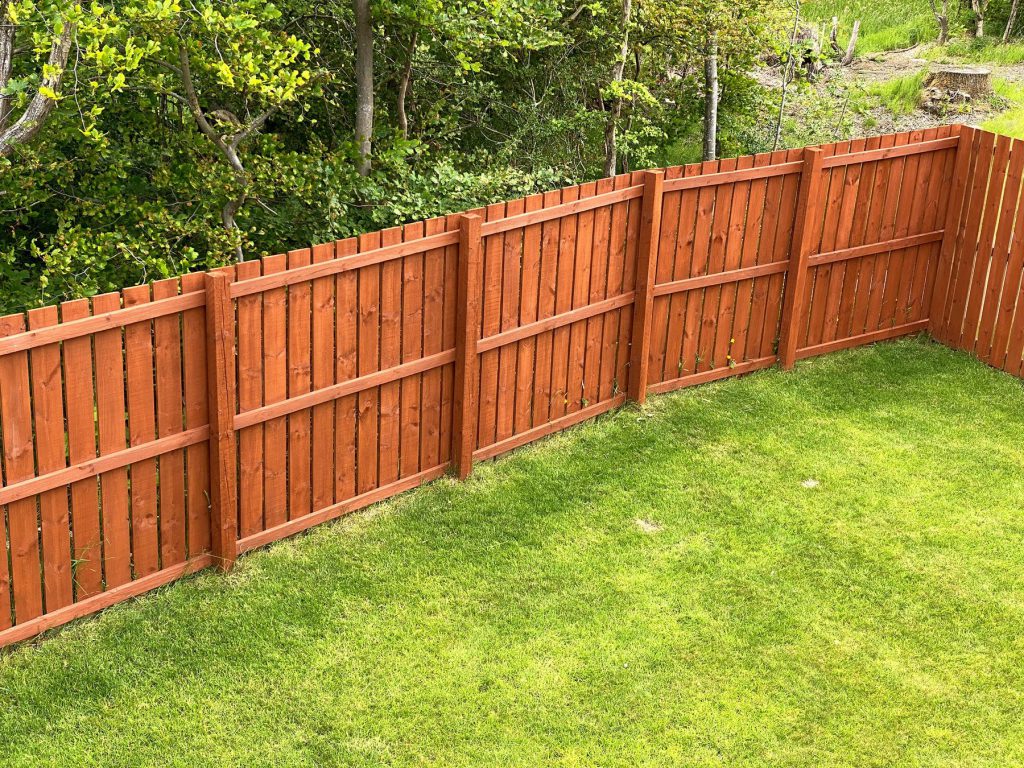
Your cedar fence looked sharp the day it went up: clean boards, warm reddish tone, exactly the feature that makes a Shoreline backyard feel finished. But cedar in the Pacific Northwest faces forces that work against it from day one, and how a cedar fence stain gets applied, or misapplied, often decides whether the fence holds up for years or shows serious problems by year two.
Most early failures trace to five avoidable mistakes. Here is what they are, and how to get the job right.
Key Takeaways
- Seattle-area weather keeps cedar under constant moisture and UV stress, speeding deterioration.
- Staining over wet or damp wood is the most common and costly mistake in this climate.
- Film-forming big-box stains tend to peel on cedar; penetrating oil-based stains perform far better.
- Proper cleaning and prep is what makes a stain bond and last.
- Weather at application time directly affects how long the finish holds.
- Restaining on schedule keeps routine upkeep from turning into a full replacement.
Why Cedar Fences in Shoreline Take a Harder Hit
Cedar is a smart choice for Pacific Northwest fencing, with natural oils that resist rot and insects better than most woods. But that resistance has limits, and Shoreline’s climate tests them every year.
Rain falls for months, soaking deep into the boards and breaking down the fibers from the inside, while high humidity keeps the surface damp and feeds mold and mildew. UV then breaks down the wood’s oils and lignin, fading the surface to gray. Most homeowners here see graying within 2 to 3 years without proper sealing.
That graying is not just cosmetic. Soft spots, peeling, and decay shorten the fence’s life, and a proper cedar fence stain slows all of it down, as long as the product, timing, and prep are right.
The 5 Most Common Cedar Fence Stain Mistakes
When a stain fails early here, it is almost always one of these five mistakes.
Problem 1: Staining Wet or Damp Wood
This catches more Shoreline homeowners off guard than anything else. A run of sunny days looks like the perfect window, but cedar holds moisture deep inside even when the surface feels dry.
Seal it too soon and you trap that vapor under the finish, which guarantees blisters and adhesion failure. Wait for at least 72 dry hours, and test first: tape a clear sheet to the fence overnight, and if there is fog or condensation by morning, the wood is still too wet.
Problem 2: Using the Wrong Type of Stain
Big-box shelves are full of film-forming and acrylic stains that sit on top of the wood like paint. On cedar that is a real problem, because as the wood expands and contracts, the film peels, cracks, and traps moisture against the surface, causing the exact damage staining should prevent.
A penetrating stain works better because it soaks into the grain and lets the wood breathe. The most common pick for a cedar fence stain is semi-transparent, which adds color and UV protection while keeping the grain visible. For older fences with surface wear, a solid stain gives more even coverage.
Problem 3: Skipping or Rushing the Prep
Even the right stain fails on an unprepared surface. Fences collect pollen, grime, mildew, and gray oxidation, and staining over that layer leads to uneven absorption, blotchy color, and a short lifespan.
Thorough cleaning is non-negotiable before any cedar fence stain job, followed by full drying and a wood brightener to open the grain. One caution: high-pressure washing tears up cedar fibers, leaving fuzzy boards that cannot absorb stain properly, so clean gently instead.
Problem 4: Staining in the Wrong Weather
Dry wood and the right product still are not enough if the conditions are wrong. Direct sun dries stain before the wood can absorb it, rain soon after washes it off, and high humidity slows curing and weakens the bond.
Pick a mild, dry day. In Shoreline that window is not always easy to find, which is one more reason this work rewards someone who can read local conditions instead of forcing the job at the wrong time.
Problem 5: Waiting Too Long Between Coats
Restaining every 2 to 3 years is part of owning a wood fence here. Push past that, especially in shaded spots where moss and moisture build up faster, and the wood can degrade past the point where a simple recoat is enough.
Guidance on routine home maintenance makes the same point: staying ahead of small upkeep protects a home’s value and prevents expensive repairs. Watch for water soaking in instead of beading, or color fading toward gray, and recoat before the old finish fully breaks down.
What Getting It Right Looks Like
A proper job follows a clear sequence: thorough cleaning, full drying, a wood brightener, and the right penetrating product applied in the right weather. No rushed steps, no skipped stages, no guessing whether the wood is dry enough.
That matters in Shoreline, where the weather does not cooperate on demand and the cost of a mistake, peeling, trapped moisture, faster decay, shows up sooner than homeowners expect. The goal is not a fence that looks good for one season, but one that holds up year after year and protects what you invested. For the products and process we use on outdoor wood, see our professional fence staining services.
Ready to Stain Your Cedar Fence?
If your cedar fence is graying, fading, or starting to fail, or you want it stained correctly before problems take hold, Tera Painting brings that same care to your cedar fence stain. With 50 years of combined team experience, transparent daily communication, and a no-surprise guarantee on every estimate, the work is built to last. Explore our local exterior painting services to see the full picture.
Call 425-696-4016 for a FREE estimate today.